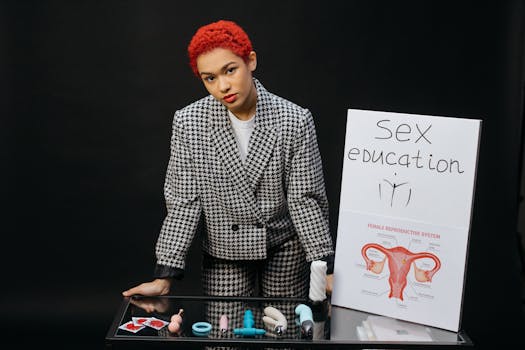
Adult media—ranging from erotic films and magazines to online platforms—has long been a subject of debate when it comes to its educational value. While many discussions focus on its entertainment or moral implications, a growing body of research and expert opinion points to a more nuanced role: that of an informal sexual educator. In a world where formal sexual education can be patchy, stigmatized, or even absent, adult media often fills in the gaps. But what exactly does it teach, how reliable is this information, and what are the potential benefits and pitfalls? This article explores the complex and evolving role of adult media in sexual education, considers its positive and negative impacts, and discusses how it can be leveraged responsibly.
The Gaps in Traditional Sexual Education
Sexual education varies dramatically around the globe and even within countries. According to a 2022 UNESCO report, only 34% of countries require comprehensive sexuality education (CSE) in schools, and the quality of these programs is inconsistent. In the United States, just 29 states and the District of Columbia mandate sex education, and only 17 require it to be medically accurate. Many curricula focus on abstinence or biological facts, often neglecting crucial areas like consent, sexual pleasure, LGBTQ+ topics, and relationship skills.
As a result, young people may leave school with significant gaps in their understanding of sexual health, relationships, and pleasure. A 2020 survey by the Guttmacher Institute found that 43% of young adults in the U.S. felt their sex education was not adequate to prepare them for real-life sexual experiences. The internet and adult media, therefore, become alternative sources for this missing information.
.png)
How Adult Media Serves as an Informal Educator
Adult media, by its very nature, provides explicit depictions of sexual acts, bodies, and scenarios. For many, this is their first visual introduction to sex—sometimes before they've had any form of formal education. A 2021 study published in the Archives of Sexual Behavior found that 62% of young adults reported viewing adult content before receiving any formal sex education.
There are several ways that adult media serves as an informal educator:
1. $1: For visual learners, seeing bodies and interactions can clarify concepts that textbooks cannot convey. This includes understanding anatomy, sexual positions, and the mechanics of intercourse. 2. $1: Adult media often features a variety of bodies, orientations, and acts—sometimes more diverse than what is discussed in classrooms. This can help individuals understand that sexual diversity is normal. 3. $1: Watching or reading adult content introduces viewers to language and terminology not typically covered in school, such as terms for sexual acts or anatomy. 4. $1: Adult media can provide a safe space to explore fantasies vicariously, helping individuals understand their own desires and boundaries without immediate real-world consequences.However, the informal education provided by adult media is not without flaws. It is often designed for entertainment, not accuracy, and may lack important context such as consent, contraception, or realistic depictions of intimacy.
Benefits: What Adult Media Can Teach (and When It Helps)
Despite the controversies, there are documented benefits of adult media in supplementing sexual education, especially when traditional channels fall short.
- $1: Studies, such as a 2020 article in the Journal of Sex Research, indicate that access to adult media can help normalize curiosity about sex, reducing shame and stigma. - $1: For those whose formal education is abstinence-only or non-existent, adult content may be their only resource for understanding sexual acts and bodies. - $1: While not always the case, some segments of adult media showcase diverse body types, abilities, and orientations, fostering acceptance and self-esteem. - $1: High-quality, ethical adult content—like that produced by Erika Lust Films or CrashPadSeries—often explicitly depicts consent and communication, modeling positive sexual behavior.In a 2019 survey by the Kinsey Institute, 38% of respondents said they learned about sexual techniques or preferences from adult content, and 24% reported gaining confidence in discussing sex with partners as a result.
Risks and Challenges: When Adult Media Misleads
While adult media can be educational, it is not without serious risks, especially when used uncritically or as the sole source of information.
- $1: Mainstream adult content often portrays exaggerated scenarios, unrealistic body standards, and unprotected or non-consensual acts. A 2016 UK study found that 45% of young men believed adult content gave them unrealistic expectations about sex. - $1: Most adult media omits important discussions about contraception, STIs, and emotional consequences. Viewers may not learn about safe sex practices or the importance of mutual respect. - $1: Some content perpetuates harmful gender roles, racism, or objectification, which can shape unhealthy attitudes towards sex and partners. - $1: Excessive consumption can interfere with relationships or daily life. The Journal of Behavioral Addictions reported in 2022 that 11% of college students exhibited signs of problematic use.Comparing Adult Media and Formal Sex Education: A Data Overview
To better understand the relative strengths and weaknesses of adult media and formal sexual education, consider the following comparison:
| Aspect | Adult Media | Formal Sex Education |
|---|---|---|
| Accessibility | High (online, 24/7, global) | Varies by region/school policy |
| Accuracy | Varies; often not medically accurate | Should be accurate, but not always comprehensive |
| Covers Consent | Rare in mainstream; more in ethical productions | Increasingly included, but not universal |
| Represents Diversity | More variety in niche/alternative content | Often limited by curriculum or cultural norms |
| Discusses Safe Sex | Rarely shown | Commonly addressed |
| Addresses Relationships | Rarely contextualized | Typically included |
| Encourages Communication | Possible in ethical/niche content | Explicitly taught in modern curricula |
The Rise of Ethical and Educational Pornography
In response to criticisms of mainstream adult media, a new genre has emerged: ethical and educational pornography. These productions prioritize consent, diversity, communication, and realism. Some platforms even work with sexual health educators to create content designed to inform as well as arouse.
For example, platforms like Bellesa, OMGYes, and MakeLoveNotPorn explicitly aim to bridge the gap between entertainment and education. OMGYes, for instance, focuses on women's sexual pleasure, using scientific studies and real-life demonstrations to teach techniques and communication skills. According to OMGYes, their research involved over 20,000 women, making it one of the largest studies on women's sexual pleasure to date.
Such content can be a valuable supplement, especially for adults seeking to improve their knowledge, confidence, or relationship skills. However, it remains a niche within the larger adult media industry, which still largely prioritizes entertainment over education.
How to Use Adult Media Responsibly in Sexual Learning
Given its reach and influence, it is important to approach adult media critically and responsibly as a source of sexual education. Here are some best practices:
- $1: Use adult content to complement, not replace, medically accurate information from trusted sources such as Planned Parenthood or the World Health Organization. - $1: Choose productions that prioritize consent, diversity, and realistic depictions. Look for creators who are transparent about their values and processes. - $1: Talk to partners or trusted adults about what you see and how it differs from real-life expectations. Open dialogue can help dispel myths and set healthy boundaries. - $1: Recognize that most adult media is designed for fantasy. Use it as a springboard for conversation or exploration, not as a definitive guide. - $1: Encourage schools and policymakers to provide comprehensive, inclusive, and evidence-based sex education so that adult media is not the only resource available.Final Reflections: The Evolving Role of Adult Media in Sexual Education
The presence of adult media in our digital lives is undeniable, and its role in sexual education is complex. While it can provide valuable exposure to bodies, acts, and diversity—especially where formal education is lacking—it is not a replacement for comprehensive, accurate, and sensitive sex education. As adult media continues to evolve, there is potential for it to play a more positive role, particularly through ethical and educational productions. Ultimately, fostering critical media literacy, open conversation, and robust formal education is key to ensuring adult media complements, rather than confuses, our understanding of sex.